
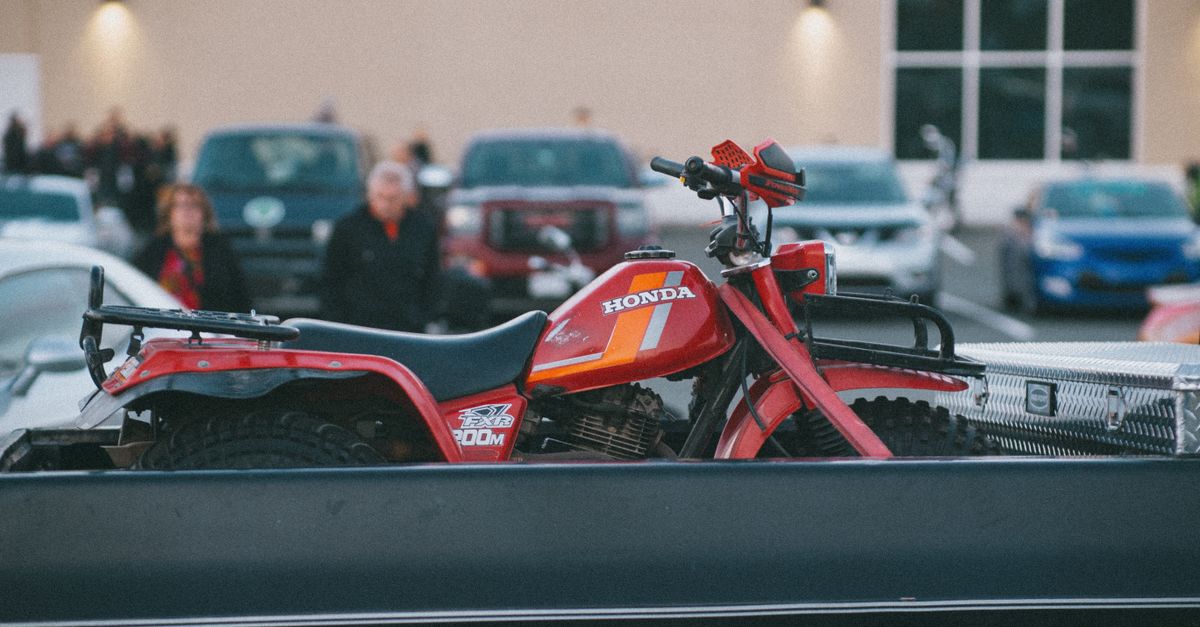
What Is an ATV Hitch and Why You Need One?
An ATV hitch connects your all-terrain vehicle to trailers or other towed equipment. Think of it as a bridge between your ATV's frame and whatever you're pulling.
Most ATV owners use hitches for hauling hunting gear, construction materials, or camping equipment. Some tow other vehicles or large machinery across rough terrain.
Without a proper hitch, you risk damaging your ATV's frame. You'll also face safety hazards on trails and roads.
Why Choose the Right ATV Hitch for Your Vehicle?
Not all hitches fit all ATVs. Your vehicle's engine size, frame design, and weight capacity determine which hitch works best.
A hitch rated too low for your load will stress your frame and suspension. A hitch that's too heavy wastes money and reduces handling.
Choosing correctly saves you money on repairs and keeps you safe. It also makes towing smoother and more predictable on trails.
What Are the Main Types of ATV Hitches Available?
ATV hitches fall into three main classes based on towing capacity and mounting style.
Class I Hitches
Class I hitches handle light towing up to 1,500 pounds. These bolt directly to your ATV's rear frame in one or two spots.
They work great for small utility trailers, cargo boxes, or lightweight equipment. Most 400cc and 500cc ATVs come with Class I hitches standard.
Cost ranges from $150 to $400 for quality aftermarket options.
Class II Hitches
Class II hitches tow 1,500 to 3,500 pounds. These mount at multiple frame points for better load distribution.
They suit mid-size ATVs (700cc to 1000cc) and more serious towing jobs. You'll see these on utility quads and sport-utility models.
Expect to pay $400 to $800 for a solid Class II hitch.
Class III Hitches
Class III hitches are the heavy-duty option, rated for 3,500 to 5,000+ pounds. These require welding or extensive frame modifications.
Only large-displacement ATVs (1000cc and up) should use Class III hitches. These are for serious work—construction, farm equipment, or large trailers.
Budget $800 to $1,500+ for professional installation and quality materials.
How Do You Calculate Your ATV's Towing Capacity?
Your ATV's towing capacity depends on engine size, frame strength, and suspension design. Never guess—check your owner's manual first.
Engine Size Guidelines
Here's a rough breakdown by engine displacement:
- 250-400cc: 1,000-1,500 lbs max
- 500-700cc: 1,500-3,000 lbs max
- 800-1000cc: 3,000-4,000 lbs max
- 1000cc+: 4,000-5,500 lbs max
These are estimates only. Your specific model may differ.
Check Your Owner's Manual
Your ATV's manual lists the exact maximum towing capacity. This accounts for your frame, suspension, and braking system.
Exceeding this limit voids your warranty and risks serious damage. It also creates liability if something goes wrong.
Account for Hitch Weight
The hitch itself adds weight to your ATV. Subtract this from your total capacity.
A typical hitch weighs 20-50 pounds. So a 3,000-pound capacity becomes 2,950-2,980 pounds for actual cargo.
How to Install an ATV Hitch Properly?
Installation difficulty varies by hitch type and your mechanical skill level. Here's what you need to know.
Gather Your Tools and Materials
- Socket set and wrenches
- Torque wrench (critical for proper fastening)
- Jack and jack stands
- New bolts and fasteners (if replacing old ones)
- Hitch assembly kit with instructions
- Safety glasses and work gloves
Step-by-Step Installation Process
- Park your ATV on level ground and engage the parking brake
- Raise the rear using a jack, then secure with jack stands
- Remove plastic skid plates or fenders blocking the frame
- Mark bolt holes on the frame using the hitch as a template
- Drill holes if needed (follow manufacturer specs exactly)
- Slide the hitch into position and start bolts by hand
- Tighten bolts in a cross pattern to avoid warping
- Use a torque wrench to tighten to manufacturer specifications
- Reinstall skid plates and fenders
- Lower the ATV and test the hitch with a gentle pull
When to Call a Professional
If your hitch requires welding, skip the DIY route. Professional shops charge $200-$500 for welded installations, but the job lasts longer.
You should also hire professionals if you're uncomfortable with mechanical work. A bad installation can fail on the trail and cause injury.
What Safety Rules Apply to ATV Towing?
Towing with an ATV is different from towing with a truck. You need extra caution on uneven terrain and water crossings.
Pre-Tow Safety Checklist
- Inspect the hitch for cracks, rust, or loose bolts
- Check tire pressure and tread depth on your ATV
- Test brakes and throttle response
- Ensure the trailer brake works (if equipped)
- Verify the load is centered and balanced
- Confirm the load doesn't exceed your capacity
- Wear a helmet and protective gear
Towing Best Practices
Go slower than you normally would. Towing changes your ATV's weight distribution and handling.
Avoid sharp turns and sudden acceleration. Your suspension and frame work harder when pulling a load.
On trails, stick to terrain your ATV can handle empty. A loaded trailer multiplies the stress on every component.
Never tow at night unless you have proper lighting. Add reflectors to your trailer for visibility.
Water Crossings and Steep Terrain
Slow down significantly before water. The trailer can shift or tip if you hit water too fast.
On steep hills, use low gear and maintain steady throttle. Avoid stopping mid-climb—your ATV may not restart.
Descending hills, use engine braking instead of riding the brakes. This prevents brake fade and loss of control.
What Legal Requirements Govern ATV Towing?
Towing laws vary by state, but most require certain safety features. Check Towing Laws by State: Your Rights & Protection Guide 2026 for your specific location.
Trailer Registration and Licensing
Most states require trailers over 1,500 pounds to be registered. You'll need a trailer license plate and proof of ownership.
Registration costs range from $50 to $200 annually depending on your state.
Safety Equipment Requirements
Many states mandate safety chains, breakaway brakes, and lighting on trailers. These prevent catastrophic failure if your hitch breaks.
Safety chains connect your trailer to your ATV as a backup. Use two chains rated for at least your towing capacity.
Lighting includes brake lights, turn signals, and reflectors. Your trailer must be visible to other trail users.
Breakaway brakes apply automatically if the trailer detaches. This stops the trailer from rolling downhill uncontrolled.
Off-Road vs. Road Towing
Off-road towing (trails and private land) has fewer rules. On public roads, your trailer must meet all safety standards.
Road towing requires mirrors, proper lights, and brake function. Some states won't let you tow on highways with an ATV.
How Much Does an ATV Hitch System Cost?
Total costs depend on hitch class, brand, and whether you install it yourself. Here's a realistic breakdown.
Hitch Hardware Costs
Budget $150 to $1,500 for the hitch assembly alone:
- Class I hitch: $150-$400
- Class II hitch: $400-$800
- Class III hitch: $800-$1,500
Installation Labor
DIY installation is free if you have tools. Professional shops charge $150-$500 depending on complexity.
Welded hitches cost more—expect $200-$600 for a quality weld job.
Trailer and Accessories
A basic utility trailer costs $1,000-$3,000. Add another $200-$500 for brakes, lights, and safety chains.
Compare this to How Much Does Towing Cost in 2025? Complete Pricing Guide to see when hiring a tow truck makes sense.
Maintenance and Repairs
Inspect your hitch yearly. Replace worn bolts or damaged components before they fail.
Budget $50-$200 annually for maintenance and minor repairs.
What Maintenance Keeps Your ATV Hitch Safe?
Regular maintenance extends hitch life and prevents failure. Here's your maintenance schedule.
Monthly Checks
- Visually inspect the hitch for cracks or bending
- Check all bolts are tight (use a wrench)
- Look for rust or corrosion starting to form
- Test the ball mount rotation—it should move freely
Seasonal Deep Clean
After muddy rides, rinse your hitch thoroughly. Mud traps moisture and accelerates rust.
Use a wire brush to remove light rust. For heavy rust, apply penetrating oil and let it sit overnight.
Dry completely and apply a rust inhibitor spray to prevent future corrosion.
Annual Professional Inspection
Have a mechanic inspect your hitch yearly. They'll check for hidden cracks and verify bolt torque.
This costs $50-$100 but catches problems before they become dangerous.
How to Troubleshoot Common ATV Hitch Problems?
Problems develop over time. Here's how to identify and fix common issues.
Hitch Wobbles Side to Side
This usually means loose bolts. Tighten all fasteners with a wrench and recheck torque specs.
If wobbling continues, the hitch may be bent. Remove it and inspect for warping. A bent hitch must be replaced—don't try to straighten it.
Difficulty Connecting Trailer
The ball mount may be rusted or misaligned. Clean the ball with a wire brush and apply grease.
If the trailer still won't seat, the ball height may be wrong. Adjust the mount up or down to match your trailer coupler.
Rust and Corrosion
Light surface rust can be cleaned with a wire brush and rust remover. Spray with a protective coating afterward.
Deep rust that pits the metal means the hitch is weakened. Replace it immediately—corrosion compromises strength.
Loud Rattling Noise While Towing
Tighten the ball nut first. If noise continues, the coupler may be loose on the ball.
Apply a rubber isolator pad between the ball and coupler to dampen vibration. This reduces noise and protects both components.
Should You Rent a Trailer or Buy Your Own?
This depends on how often you tow. Let's compare the options.
Buying a Trailer
Buy if you tow more than 10-12 times per year. Ownership costs average $2,000-$5,000 upfront plus $200-$400 annually for maintenance and registration.
You control the condition and have it ready whenever needed. You also build equity in an asset.
Renting a Trailer
Rent for occasional jobs. Daily rental costs $50-$150, or $300-$800 for a week.
Rental makes sense if you tow fewer than 5-6 times yearly. You avoid storage costs and maintenance headaches.
Professional Towing Services
For one-time moves or long distances, hire professionals. Towing companies handle everything safely.
See How to Choose a Reliable Tow Truck Company: Expert Guide 2026 for tips on finding quality operators.
How Does Insurance Cover ATV Towing?
Your ATV insurance may cover towing, but it depends on your policy. Check Towing Insurance Coverage Guide: What's Covered and What's Not for details.
Standard ATV Insurance
Most policies include roadside assistance with towing up to 5-10 miles. This covers mechanical breakdowns, not accidents.
Towing costs beyond the included distance run $3-$5 per mile on average.
Adding Towing Coverage
You can add premium towing coverage for $10-$30 annually. This extends coverage to 50-100 miles and covers more scenarios.
If you tow regularly, this upgrade is worth the cost.
Trailer Coverage
Your ATV policy typically doesn't cover the trailer itself. You'll need separate trailer liability insurance.
Trailer coverage costs $100-$300 annually depending on trailer value.
What Should You Know Before Your First Towing Job?
Preparation prevents problems. Follow these steps before you tow for the first time.
Pre-Tow Preparation Checklist
- Read your ATV and hitch manuals completely
- Practice connecting and disconnecting the trailer
- Test all lights and brakes on the trailer
- Fill your ATV's fuel tank—towing uses more gas
- Check tire pressure on your ATV (increase by 2-3 psi)
- Inspect the trailer for damage or loose parts
- Balance the load—heavier items go over the axle
- Secure the load with straps or chains
- Wear proper safety gear: helmet, gloves, boots
- Start with short distances to get comfortable
First Tow Route Planning
Choose familiar, well-maintained trails for your first job. Avoid challenging terrain until you're confident.
Go during daylight hours. Bring a friend to help if something goes wrong.
Start at a slow speed and gradually build confidence. You'll learn how your ATV handles the extra weight.
Frequently Asked Questions About ATV Hitches
Can I Use a Car Hitch on My ATV?
No. Car hitches are designed for different frame geometry and weight distribution. Using a car hitch on an ATV creates safety hazards and voids warranties. Always use a hitch rated specifically for your ATV model.
What's the Difference Between a Ball Hitch and a Pintle Hitch?
Ball hitches use a removable ball mount and are standard on most ATVs. Pintle hitches use a hook-and-loop connection and work better for heavy loads. Pintle hitches are tougher but less convenient for casual towing.
Do I Need Trailer Brakes for My ATV?
Trailer brakes aren't legally required for off-road use, but they're strongly recommended for safety. On public roads, many states require brakes on trailers over a certain weight. Check your local laws.
How Often Should I Inspect My ATV Hitch?
Inspect monthly if you tow regularly, or before each towing job. Annual professional inspection is also a good idea. More frequent checks catch problems early.
What's the Maximum Safe Towing Speed with an ATV?
Never exceed 35-40 mph when towing, even if your ATV can go faster. Towing changes your handling and stopping ability. Lower speeds on rough terrain—sometimes just 10-15 mph is appropriate.
Can I Tow Uphill with a Heavy Load?
Yes, but use low gear and maintain steady throttle. Never stop on an incline—you may not be able to restart. Descend using engine braking to avoid overheating your brakes.
What Should I Do If My Hitch Breaks While Towing?
Stop immediately in a safe location. Don't try to continue towing. Call for professional help or use towing services near you to safely retrieve your trailer.
Is a Welded Hitch Better Than a Bolt-On Hitch?
Welded hitches are stronger and more permanent, but they require professional installation. Bolt-on hitches are easier to install and remove. For heavy towing, welded is better. For casual use, bolt-on is fine.
How Much Weight Can a Standard ATV Hitch Handle?
Standard hitches handle 1,500-3,500 pounds depending on class. Always check your specific hitch rating and your ATV's maximum towing capacity. Never exceed either limit.
Do I Need a License to Tow a Trailer with My ATV?
Off-road towing doesn't require special licensing. On public roads, some states require a trailer endorsement on your driver's license. Check Towing Laws by State for your location.
Key Takeaways for Safe ATV Towing
An ATV hitch is essential for safe towing, but choosing the right one matters. Match your hitch class to your ATV's size and your typical loads.
Always follow manufacturer specifications for installation and weight limits. Proper maintenance keeps your hitch safe for years.
When in doubt, hire professionals. Quality towing services know how to handle your ATV safely.
Prices from providers like AAA, GEICO, Progressive, and State Farm are current as of 2026. We're not affiliated with these companies.
For help finding quality towing services in your area, find towing services near you on USA Tow Finder.
Frequently Asked Questions
Need Emergency Towing Services?
Don't wait when you're stranded. Get professional help now.
Find Towing Services Near You
Discussion (0)
Be the first to comment!
Share your experience or ask questions about towing services.