
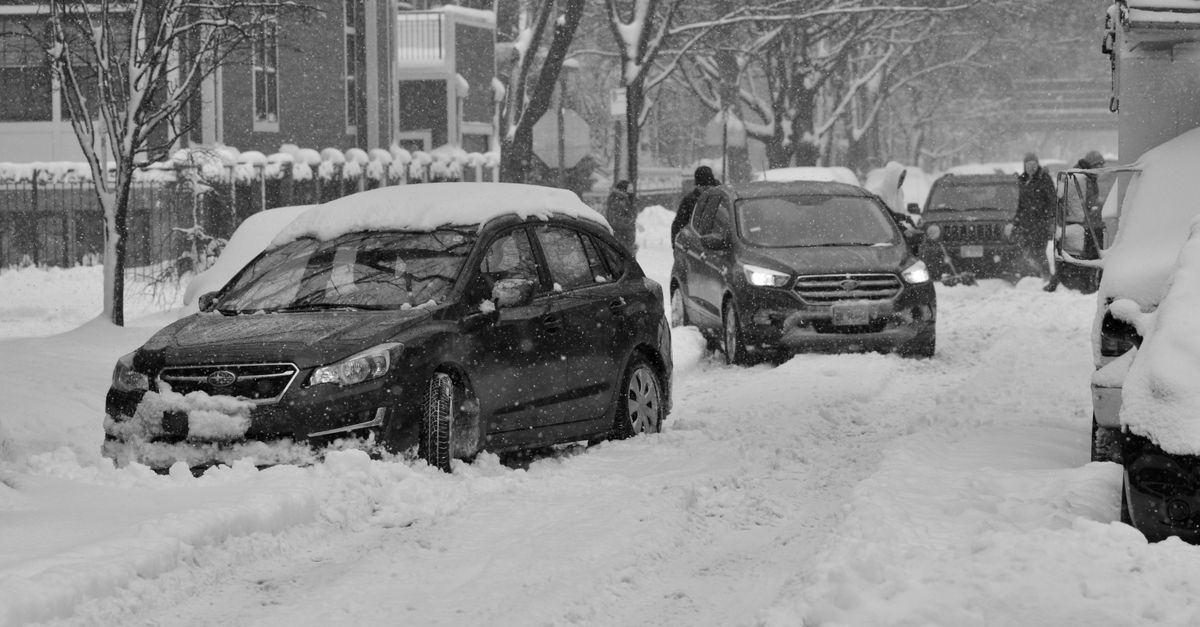
What Does It Mean When Your Car Is Stuck in Snow?
Your car is stuck in snow when the wheels lose traction and spin without moving forward or backward. This happens when snow packs under the tires or ice forms between the wheel and ground.
The difference between being stuck and stranded matters. Stuck means your car won't move, but the engine runs fine. You've got options before you need professional help.
Most winter stuck situations happen in parking lots or on gentle slopes. You're not necessarily in danger, but you need grip to escape.
Why Do Cars Get Stuck in Snow So Easily?
Snow reduces friction between your tires and the road. Your wheels spin faster but move slower. The problem gets worse when snow compacts into ice.
Cold temperatures make rubber stiffer. Your tires grip less effectively when it's freezing. Add moisture, and you get a slippery surface your vehicle can't bite into.
Tire pressure matters too. Cold weather deflates tires naturally. Lower pressure means less contact with the ground, which means less traction.
Weight distribution is crucial. Front-wheel-drive cars struggle more because the engine sits over the driving wheels. Rear-wheel-drive vehicles need extra weight in the trunk to maintain grip.
How to Rock Your Car Out of Snow Safely
The rocking method works surprisingly well. You'll shift between Drive and Reverse to build momentum. Don't spin your wheels aggressively—that wastes fuel and generates heat that melts snow and refreezes it.
Step-by-Step Rocking Technique
- Clear snow from around all four wheels using a shovel or your hands
- Start the engine and let it warm for 30 seconds
- Shift to Drive and gently press the accelerator
- As the car moves forward slightly, shift to Reverse immediately
- Gently accelerate backward, then shift to Drive again
- Repeat this forward-backward pattern 5-10 times
- Each cycle should move you slightly further
- Stop if wheels spin freely without moving—this means you need traction help
Warning: Never rev the engine hard. This spins tires and melts snow into ice. Gentle, controlled movements work best.
Most cars escape within 2-3 minutes using this method. If you're still stuck after 10 attempts, move to traction-boosting techniques.
Using Kitty Litter and Sand for Instant Traction
Kitty litter is your secret weapon. It provides immediate grip under spinning wheels. Sand works too, but kitty litter absorbs moisture better.
You don't need much. A bag or two creates enough traction for most vehicles. The granules wedge between the tire and ice, giving wheels something to grip.
How to Apply Kitty Litter Correctly
- Clear snow away from the drive wheels (front wheels for most cars)
- Pour kitty litter in front of and behind each drive wheel
- Spread it in a line extending 2-3 feet from the tire
- Use your foot to pack it slightly—don't compress it completely
- Gently accelerate. Don't spin the wheels.
- You'll feel the tires grab almost immediately
- Drive forward slowly and steadily
Keep a bag in your trunk during winter. It costs $5-$10 and weighs almost nothing. Many drivers forget this trick and end up calling for help they didn't need.
If you don't have kitty litter, use sand, gravel, dirt, or even shredded cardboard. Anything rough gives your tires something to bite into.
Deflating Tires Slightly for Better Winter Grip
This sounds counterintuitive, but slightly deflated tires create a larger contact patch. More rubber touches the ground, which means more traction.
You only need to drop pressure by 2-4 PSI. Don't go extreme—that damages your tires and rims.
Safe Tire Deflation Process
- Check your tire pressure with a gauge
- Use a valve stem tool to release air slowly
- Reduce pressure by only 2-4 PSI on all four tires
- Try rocking or accelerating gently
- Once free, reinflate to normal pressure immediately
- Visit a tire shop within 24 hours to verify pressure
Important: Only deflate slightly and for short distances. Driving on underinflated tires generates heat, which damages sidewalls and can cause blowouts.
This method works best combined with kitty litter or sand. The deflated tire plus traction material equals freedom in most situations.
Can Heat Help Free a Stuck Car in Snow?
Yes, but carefully. Heat melts ice under your car, reducing friction briefly. You need to use this window to escape.
Start your engine and let it run. Warm air underneath the vehicle helps break the bond between ice and tires. This takes 5-10 minutes.
Using Heat Effectively
- Let your engine run and warm the undercarriage
- Keep the car in Park or Neutral
- Turn on the heater to maximum
- After 5-10 minutes, try rocking gently
- You might feel the vehicle shift slightly as ice melts
- Gently accelerate forward when you feel movement
- Don't spin wheels—move steadily forward
This works best on thin ice under packed snow. Thicker ice needs more time or combined methods.
Never stay in a running car in an enclosed space. Carbon monoxide kills. Only use this method in open air with the car running outside.
What About Using Floor Mats for Traction?
Your car's floor mats can provide emergency traction. Place them under the drive wheels with the rubber side down.
This works because the rubber grips better than smooth snow. It's a temporary fix that might get you 10-20 feet forward.
Floor Mat Traction Method
- Remove floor mats from inside your car
- Place them under the drive wheels (front wheels for most cars)
- Position the rubber side down and textured side up
- Gently accelerate—don't spin wheels
- The mat should grip and pull the tire forward
- Keep driving forward steadily until you're on clear pavement
Floor mats aren't a complete solution, but they work in a pinch. Combine this with rocking or heat for better results.
You might lose the mat under your car. That's okay—it's worth $20-$30 to avoid a $150-$300 tow.
Should You Try Chains or Cables in Emergency?
If you carry chains, this is the time to use them. Chains bite into snow and ice like nothing else. They're designed for exactly this situation.
Installing chains takes 10-15 minutes. You'll need gloves and basic knowledge. Most cars have instructions in the owner's manual.
Quick Chain Installation for Stuck Cars
- Park on level ground if possible
- Turn on hazard lights
- Put the car in Park with the parking brake set
- Lay chains out flat in front of the drive wheels
- Drive forward slowly to position the tire in the middle of the chain
- Connect the chains behind the tire, following manufacturer instructions
- Make sure connections are tight and secure
- Drive slowly forward—chains take time to settle
Chains are heavy and awkward. Most drivers don't carry them. But if you live in snow country, they're worth keeping in your trunk.
Cables are lighter and easier to install than chains. They provide similar traction with less hassle.
When Should You Call a Professional Tow Service?
Know when to give up and call for help. After 15-20 minutes of trying these methods, professional towing saves time and stress.
Call a tow truck if your car is stuck on a slope, surrounded by other vehicles, or on a busy road. Safety comes first.
Signs You Need Professional Help
- You've tried rocking, traction materials, and heat with no progress
- Your car is stuck in traffic or a dangerous location
- The snow is deeper than your car's clearance
- You're alone and uncomfortable trying removal methods
- Your engine sounds wrong or won't turn over
- You've been stuck for more than 30 minutes
- Temperature is dropping and you're losing daylight
Professional tow services cost $75-$200 depending on your location and the situation. That's expensive but necessary sometimes.
If you have roadside assistance through roadside assistance coverage, call them first. Your insurance or membership might cover the cost completely.
How to Prevent Getting Stuck in Snow
Prevention is always cheaper than recovery. Small changes to your winter driving habits eliminate most stuck situations.
Keep your car maintained. Good tires, proper fluid levels, and a strong battery matter more in winter. A $200 winter maintenance check prevents thousands in emergency costs.
Prevention Checklist
- Use winter or all-season tires with adequate tread depth
- Check tire pressure monthly—cold reduces it naturally
- Keep your fuel tank at least half full to prevent fuel line freeze
- Maintain your battery—cold reduces its power by 50%
- Clear snow and ice from windows, mirrors, and lights
- Drive slowly and avoid sudden acceleration or braking
- Keep emergency supplies in your trunk year-round
- Know your car's four-wheel-drive or traction control features
Carry an emergency kit with jumper cables, a flashlight, blankets, and a phone charger. These items cost under $50 and could save your life.
If you're concerned about winter driving, consider roadside assistance membership. Peace of mind costs $60-$150 per year.
What's Inside a Winter Emergency Kit?
A proper kit helps you escape stuck situations and handle other winter emergencies. You don't need expensive gear—basic items work.
Essential Winter Emergency Kit Items
- Kitty litter or sand — 2-3 bags for traction
- Shovel — compact folding shovel works fine
- Jumper cables — for dead battery situations
- Blanket or emergency blankets — for warmth if stranded
- Flashlight with extra batteries — visibility matters at night
- First aid kit — for minor injuries
- Phone charger or portable battery — keep your phone alive
- Flares or reflective triangles — warn other drivers
- Gloves and hat — protect yourself while working
- Snacks and water — stay hydrated and energized
Total cost for a complete kit: $40-$75. That's less than one tow service. Keep this in your trunk from November through March.
Check your kit every winter. Replace dead batteries, expired food, and worn items. A well-maintained kit saves lives.
How Much Will a Tow Cost if DIY Methods Fail?
Towing costs vary by location and situation. A simple stuck-car removal runs $75-$150 in most areas. Long-distance tows cost much more.
Winter creates higher demand for tow trucks. Prices spike during heavy snow. You might pay 30-50% more during storms.
Check our complete towing cost guide for pricing in your area. Knowing typical costs helps you negotiate fairly.
Some tow companies charge extra for:
- After-hours service (nights and weekends cost more)
- Holiday premiums (Thanksgiving and Christmas weeks are pricier)
- Snow removal before towing
- Winching or special extraction methods
Always ask for the full price before authorizing service. Prices from providers like AAA, GEICO, Progressive, and State Farm are current as of 2026. We're not affiliated with these companies.
If you have roadside assistance, your cost might be zero. Check your policy before calling.
FAQ: Common Questions About Cars Stuck in Snow
People ask the same questions repeatedly. Here are the answers that matter most.
- How long can I leave my car running to generate heat? — Run it for 5-10 minute intervals. Every 10 minutes, turn it off for 5 to prevent carbon monoxide buildup and fuel waste.
- Will rocking damage my transmission? — No. Shifting between Drive and Reverse at low speeds is safe. Modern transmissions handle this easily.
- Can I use ashes or dirt instead of kitty litter? — Yes. Anything with texture works. Ashes from a fireplace, gravel, or dirt all provide traction.
- What if my wheels just spin and don't grab? — Stop trying. You're making ice. Add more traction material and try again, or call a professional.
- Should I call a tow truck immediately or try yourself first? — Try DIY methods for 15-20 minutes. If you're not free by then, call. Your time is valuable.
- Does four-wheel-drive prevent getting stuck? — No. Four-wheel-drive helps you move through snow, but even 4WD vehicles get stuck on ice. It's not invincible.
- Can I use my car's floor mats permanently for traction? — No. They're temporary only. Retrieve them once you're on clear pavement. They'll damage if left under the car.
- What if it's too cold to install chains? — Wear gloves and work quickly. Chains are easier to install in cold than you think. Practice once in your driveway before winter arrives.
- Will my insurance cover a tow for being stuck in snow? — Depends on your policy. Check your roadside assistance coverage. Many policies include free towing for stuck vehicles.
- How do I find a reliable tow service in winter? — Use USA Tow Finder to locate trusted towing providers before you need them. Read reviews and save numbers in your phone.
Final Tips: Stay Calm and Think Smart
Being stuck in snow feels urgent, but panic leads to mistakes. Take a breath. Most stuck cars escape without professional help.
Start with the easiest methods: rocking and clearing snow. Then try kitty litter or sand. Heat helps if you have time. Combine methods for best results.
Keep emergency supplies in your car. A $50 investment in a winter kit prevents hundreds in towing costs.
If DIY fails, call a professional. Tow trucks exist for situations you can't handle alone. There's no shame in using them.
Winter driving is dangerous. Respect snow and ice. Drive slowly, maintain your vehicle, and prepare for emergencies. You'll avoid most stuck situations with these habits.
Need professional help? Find towing services near you on USA Tow Finder. We'll connect you with reliable providers in your area.
Frequently Asked Questions
Need Emergency Towing Services?
Don't wait when you're stranded. Get professional help now.
Find Towing Services Near You


Discussion (0)
Be the first to comment!
Share your experience or ask questions about towing services.