
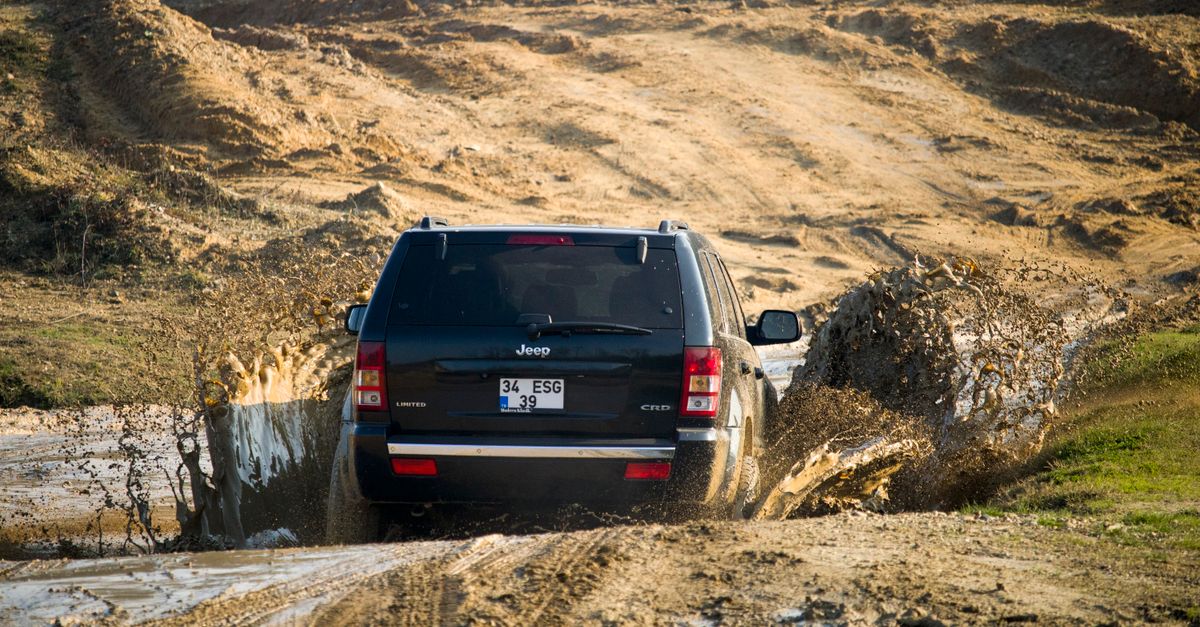
What Are SUV Towing Limits and Why They Matter
Your SUV's towing limit is the maximum weight it can safely pull behind it. This isn't a suggestion—it's an engineered safety threshold. Exceeding it puts massive stress on your engine, transmission, brakes, and suspension.
Think of it like this: your SUV was built with specific components rated for specific loads. Go beyond that, and those parts fail. You're not just risking damage to your vehicle. You're risking your safety and everyone else on the road.
The good news? Finding your real towing capacity takes just a few minutes. Let's walk through how.
How to Find Your SUV's Exact Towing Capacity
Your owner's manual is the gold standard. Open it and search for "towing capacity" or "gross vehicle weight rating." You'll find a number—maybe 3,500 pounds, maybe 6,000. That's your starting point.
Can't find the manual? Check the driver's side door jamb. There's usually a sticker with weight specifications. You can also search online: "[Your Year] [Your Make] [Your Model] towing capacity."
But here's the catch: that number isn't the whole story. You need to understand the parts that make up that limit.
Understanding GVWR (Gross Vehicle Weight Rating)
GVWR is the maximum weight your SUV can carry when fully loaded—including passengers, cargo, fuel, and the trailer tongue weight. Let's say your GVWR is 5,000 pounds and your SUV weighs 3,800 pounds empty.
That leaves you 1,200 pounds total for people, stuff, and the tongue weight of your trailer. If you have four people in the SUV weighing 600 pounds combined, you've got 600 pounds left. That's your real towing capacity—not the 6,000 pounds the brochure promised.
This is where many SUV owners run into trouble. They see the advertised towing capacity and assume that's what they can safely pull. In reality, once you account for passengers, fuel, cargo, and the tongue weight pressing down on your hitch, your actual available capacity shrinks dramatically. Understanding this relationship between GVWR, payload, and towing capacity is essential for safe towing.
Payload Capacity and Tongue Weight
Payload is how much weight you can put in your SUV's bed or cargo area. Tongue weight—the weight pressing down on your hitch—typically equals 10-15% of your total trailer weight.
Here's the math: if your trailer weighs 4,000 pounds, the tongue weight is about 400-600 pounds. That counts against your GVWR, not your towing capacity. This is where people get confused and overload their vehicles.
For example, a 5,000-pound trailer with a 600-pound tongue weight means you're using 600 of your available GVWR just for the connection point. If your GVWR is 6,500 pounds and your empty SUV weighs 4,200 pounds, you have only 2,300 pounds available for passengers, cargo, and that 600-pound tongue weight. You'd have just 1,700 pounds left for people and cargo inside the vehicle.
Common SUV Towing Capacity by Vehicle Size
Want a quick reference? Here's what you'll typically find across different SUV classes:
| SUV Type | Typical Towing Capacity | Typical GVWR |
|---|---|---|
| Compact SUVs (CR-V, RAV4) | 1,500–3,500 lbs | 4,500–5,000 lbs |
| Midsize SUVs (Highlander, Pathfinder) | 3,500–5,000 lbs | 5,000–5,500 lbs |
| Full-Size SUVs (Suburban, Tahoe) | 5,000–6,500 lbs | 6,000–7,000 lbs |
| Performance SUVs (Expedition, Durango) | 5,600–8,000 lbs | 6,500–7,500 lbs |
Important: These are averages. Your specific vehicle might be different. Always check your owner's manual. Factors like engine type (gas vs. diesel), transmission (automatic vs. manual), and available packages can significantly affect your vehicle's actual towing capacity. A base model and a fully equipped version of the same SUV may have different ratings.
Essential Safety Equipment for SUV Towing
You can't just hook up a trailer and go. Your SUV needs proper gear to tow safely. Here's what you absolutely need:
Hitch Class and Receiver Size
Hitches come in classes: Class I (up to 3,500 lbs), Class II (up to 5,000 lbs), Class III (up to 8,000 lbs). Your hitch must match or exceed your trailer's weight. A Class I hitch can't safely handle a 5,000-pound trailer, even if your SUV technically could.
Receiver size matters too. Most SUVs use 2-inch receivers, but some need 1.25-inch. Install the wrong size and you've got a dangerous connection. Always verify your SUV's receiver size before purchasing a hitch, and ensure the hitch ball size matches your trailer coupler size (typically 1 7/8-inch, 2-inch, or 2 5/16-inch).
Trailer Brakes and Weight Distribution
If you're towing more than 1,000 pounds, your trailer needs brakes. Most states require them above 2,000-3,000 pounds. Trailer brakes apply automatically when you brake, preventing jackknifing and loss of control.
Weight-distribution hitches spread the tongue weight across your SUV's axles more evenly. This improves handling and reduces the chance of your rear end sagging or your front tires lifting off the ground. They're especially important if you're towing a trailer that represents more than 50% of your vehicle's curb weight.
Mirrors, Lights, and Safety Chains
You need side mirrors that let you see both sides of your trailer. Trailer lights must match your SUV's electrical system. Safety chains should cross under the hitch as a backup connection.
Check your trailer's wiring before every trip. A short or loose connection can cause brake failure on the trailer—a serious hazard. Additionally, ensure your SUV's electrical system can handle the trailer's lighting load. Some vehicles require a brake controller installation for electric trailer brakes to function properly.
Best Practices for Towing With Your SUV
Having the right equipment is half the battle. How you tow matters just as much.
Load Your Trailer Correctly
Put heavier items low and toward the front of the trailer. Aim for 50-60% of the trailer's weight forward of the axles. This creates proper tongue weight and keeps the trailer stable during turns and braking.
Never load all your cargo at the back. It shifts the weight behind the axles, which reduces your tongue weight and can cause the trailer to sway. Additionally, ensure your load is secured with tie-downs and doesn't shift during transport. Shifting cargo can alter your trailer's balance and create dangerous handling conditions.
Check Tire Pressure Before You Leave
Towing adds stress to your tires. Check both your SUV's tires and your trailer's tires. Underinflated tires overheat and fail. Overinflated tires don't grip the road as well.
Most SUVs need higher tire pressure when towing. Check your owner's manual for the recommended PSI when loaded. Also inspect your tires for uneven wear, cracks, or bulges. Worn or damaged tires are a safety risk when towing and should be replaced before attempting any towing.
Reduce Speed and Increase Following Distance
You're heavier now. You need more room to stop. Reduce your speed by 5-10 mph below normal highway speeds. Keep at least 8-10 car lengths behind the vehicle in front of you.
On steep grades, downshift to a lower gear. This uses engine braking instead of relying on your brakes alone. Constant brake application creates heat, which reduces braking power. In mountain terrain, this becomes even more critical—consider pulling over to let your brakes cool if you're descending long grades.
Avoid Sudden Maneuvers
Don't change lanes abruptly. Don't brake hard on curves. Both can cause the trailer to sway or fishtail. Smooth, gradual movements keep everything under control.
If your trailer starts to sway, don't brake hard. Ease off the accelerator and maintain a steady wheel position. Let the vehicle's momentum settle the sway. Practice emergency maneuvers in a safe environment before towing on highways to develop muscle memory for proper responses.
Common Mistakes SUV Owners Make When Towing
We see these errors over and over. Here's what to avoid:
- Ignoring GVWR: The brochure says your SUV tows 5,000 pounds. Your GVWR says you can only add 2,500 pounds total (including people and cargo). Don't exceed GVWR.
- Skipping the weight distribution hitch: These aren't optional for heavier trailers. They prevent sag and improve braking.
- Using an undersized hitch: A Class I hitch on a heavy load is asking for trouble. Match your hitch to your trailer weight.
- Forgetting trailer maintenance: Check trailer wheel bearings, lights, and brakes before every trip.
- Overloading the rear of the trailer: This shifts weight away from the tongue and causes sway.
- Not adjusting driving habits: Towing isn't highway cruising. Slower speeds and longer following distances are non-negotiable.
- Neglecting vehicle maintenance: Worn brakes, old transmission fluid, and failing engine components reduce your safe towing capacity. Stay current with maintenance schedules.
- Towing in bad weather without experience: Rain, snow, and high winds make towing exponentially more dangerous. Build your skills in ideal conditions first.
Towing Capacity vs. Real-World Conditions
Your SUV's towing capacity assumes ideal conditions: flat roads, cool weather, a properly maintained vehicle, and an experienced driver.
In the real world, things change. Mountainous terrain, hot weather, old spark plugs, and worn brakes all reduce your effective towing capacity. If your manual says 5,000 pounds, you might safely tow only 4,000 in the Rocky Mountains during summer.
Be conservative. If you're unsure, tow lighter. Your transmission will thank you. High-altitude towing, extreme temperatures, and heavy traffic all demand reducing your load below the manufacturer's maximum rating.
When to Upgrade or Get Professional Help
Sometimes your SUV just isn't the right tool for the job. If you need to tow regularly—or tow heavy loads—consider these options:
Upgrade Your Vehicle
A truck or larger SUV with a diesel engine might be better suited. Trucks have higher GVWR ratings and stronger transmissions. They're built for towing. If you find yourself regularly exceeding 75% of your SUV's towing capacity, upgrading to a vehicle designed for heavier loads will save money on repairs and provide better safety margins.
Rent a Tow Vehicle
For a one-time move or haul, renting a truck is cheaper than overloading your SUV or upgrading. Many rental companies offer towing packages with insurance. A weekend truck rental typically costs $40-80 per day, which is far less than transmission repair costs ($1,500-3,000+).
Hire Professional Movers
If you're moving heavy equipment or a long distance, professionals have the right gear and insurance. It costs more upfront, but it's safer and often cheaper than repairing transmission damage. Professional movers also carry liability insurance that protects you if something goes wrong during transport.
For roadside towing emergencies, find towing services near you on USA Tow Finder. Professional towers handle heavy loads safely.
Insurance and Legal Considerations for SUV Towing
Before you tow, understand what your insurance covers. Many policies exclude damage from towing if you exceed your vehicle's rated capacity. Some insurers require a towing endorsement.
Check your towing insurance coverage before you leave. You don't want to discover gaps in coverage when something goes wrong. Some insurance companies charge extra for towing coverage, typically $5-15 per year, which is a worthwhile investment.
Different states have different towing regulations. Some require brake lights, mirrors, and safety chains. Others have speed limits for vehicles towing. Familiarize yourself with local laws before crossing state lines. Violating towing regulations can result in fines of $100-500 or more, plus potential liability if an accident occurs.
SUV Towing Equipment Checklist
Before you tow, make sure you have all this:
- Hitch rated for your trailer weight (Class I, II, or III)
- Trailer brakes (if trailer exceeds 1,000 lbs)
- Weight-distribution hitch (if trailer exceeds 3,000 lbs)
- Properly wired trailer lights and electrical connector
- Safety chains (crossed under hitch)
- Extended or towing mirrors
- Tire pressure gauge and inflator
- Spare trailer tire and jack
- Owner's manual with GVWR and towing capacity ratings
- Updated insurance documentation
- Flashlight and basic tools for roadside adjustments
- Brake fluid and transmission fluid for emergencies
Frequently Asked Questions About SUV Towing Limits
Q: Can I tow more if I have a heavy-duty hitch?
A: No. The hitch is just one component. Your engine, transmission, brakes, and GVWR set the real limit. A Class III hitch doesn't change your GVWR or your vehicle's mechanical limits.
Q: Does a diesel engine change my towing capacity?
A: Yes. Diesel engines produce more torque and typically allow higher towing capacities than gas engines in the same vehicle. Check your manual for the specific diesel rating.
Q: What happens if I exceed my towing capacity?
A: You risk transmission overheating, brake failure, suspension damage, and loss of control. You might also void your warranty and lose insurance coverage for related damage.
Q: Do I need a special license to tow with my SUV?
A: Most states don't require a special license for standard passenger vehicle towing. Check your state's regulations. Some require endorsements for heavy trailers.
Q: How do I know if my trailer brakes are working?
A: Have them inspected by a trailer shop annually. Before each trip, test them in a safe area by braking firmly. You should feel a difference in braking force when the trailer brakes engage.
Q: Can I upgrade my SUV's towing capacity?
A: You can install better brakes, upgrade the transmission cooler, or add other components. But you can't change your GVWR or engine's fundamental limits. Upgrades help, but they have limits too.
Q: Is a weight-distribution hitch worth it?
A: Yes, if you're towing more than 3,000 pounds. It improves handling, reduces sag, and protects your SUV's suspension. The cost ($300-800) is cheap compared to transmission or suspension repair.
Q: How often should I service my SUV when towing regularly?
A: More often than normal. Check your owner's manual for towing service intervals. Many recommend transmission fluid changes every 30,000 miles when towing regularly (vs. 60,000-100,000 miles for normal driving).
Q: What's the difference between payload and towing capacity?
A: Payload is weight you put in your SUV. Towing capacity is weight you pull behind it. Both count toward your GVWR. A 4,000-pound towing capacity with 1,500 pounds of payload leaves you only 5,500 pounds total if your GVWR is 7,000.
Q: Are SUVs really suited for towing, or should I buy a truck?
A: SUVs work fine for light to moderate towing (under 4,000 pounds regularly). For heavy or frequent towing, trucks are better designed. They have higher GVWR, stronger transmissions, and more cooling capacity.
Final Thoughts on SUV Towing Safety
Your SUV's towing limit exists for a reason. Engineers tested the vehicle's components under load and set a maximum safe capacity. Respecting that limit keeps you, your passengers, and other drivers safe.
Check your owner's manual. Install proper equipment. Load your trailer correctly. Adjust your driving habits. Follow these rules and you'll tow safely for years.
If you ever need professional towing assistance—whether for a breakdown or emergency—find trusted towing providers on USA Tow Finder. Professional towers understand vehicle limits and have the right equipment for any situation.
Prices from providers like AAA, GEICO, Progressive, and State Farm are current as of 2026. We're not affiliated with these companies. Always verify current rates and coverage with your insurance provider.
Frequently Asked Questions
Need Emergency Towing Services?
Don't wait when you're stranded. Get professional help now.
Find Towing Services Near You


Discussion (0)
Be the first to comment!
Share your experience or ask questions about towing services.