
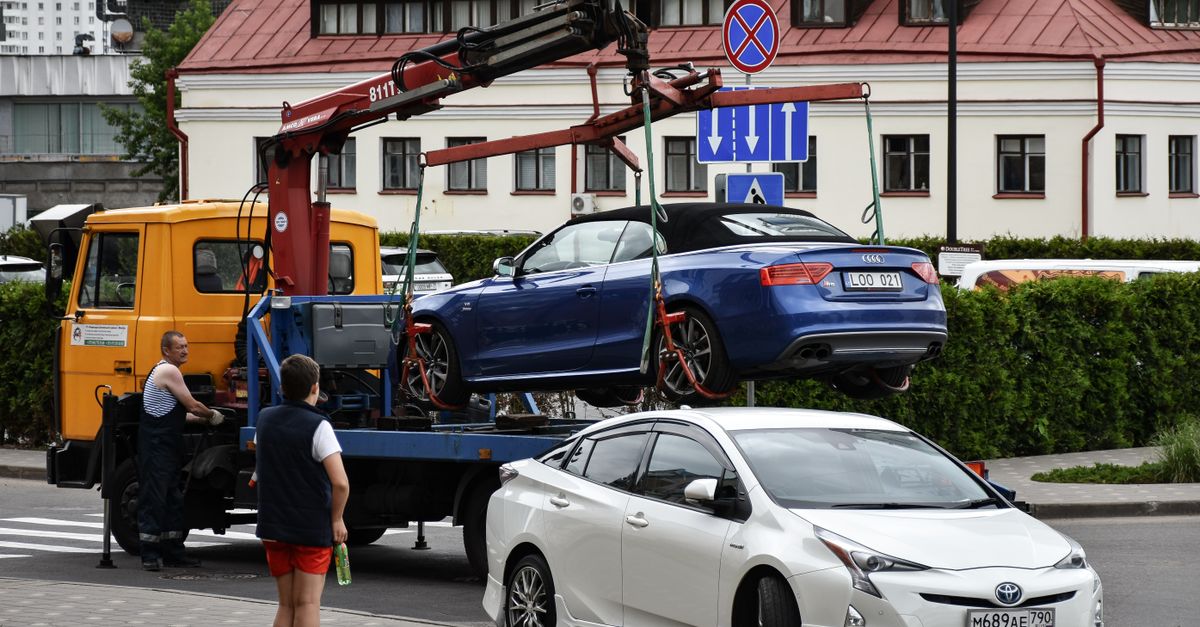
Why Towing an AWD Vehicle Is Different
All-wheel drive vehicles are more complex than two-wheel drive cars. The engine constantly powers all four wheels through interconnected systems. Unlike traditional two-wheel drive vehicles where only the front or rear wheels receive engine power, AWD systems distribute power dynamically across all four wheels through a series of differentials, transfer cases, and coupling mechanisms.
When you tow an AWD vehicle the wrong way, the wheels spin without engine power. This creates friction inside the transmission. Over time, this friction generates heat and wears out internal parts. The transmission fluid, designed to lubricate and cool the system under controlled conditions, becomes overwhelmed and breaks down under the extreme stress of being dragged while engaged.
Think of it like running an engine with no oil. The metal parts grind together and fail quickly. That's why towing an AWD vehicle demands careful planning. The consequences aren't just inconvenient—they're financially devastating and entirely preventable with proper knowledge.
What Happens If You Tow an AWD Vehicle Incorrectly?
Flat-towing an AWD vehicle (all four wheels on the ground) causes serious damage. The transmission heats up rapidly. Internal gears wear out. Seals fail and fluid leaks everywhere. The differential gears can strip, the torque converter can fail, and internal clutch packs can burn out within hours of improper towing.
Repair costs for transmission damage range from $2,500 to $4,000. Some vehicles need complete transmission replacements costing $5,000 to $8,000. That's expensive. In some cases, especially with luxury or high-performance AWD vehicles, transmission replacement can exceed $10,000. Additionally, if transmission damage spreads to the differential or transfer case, repair costs can skyrocket even further.
I've seen drivers ignore this rule and regret it. One person towed their Jeep Wrangler 50 miles with all wheels down. The transmission seized after 200 more miles of driving. That mistake cost them over $6,000. Another driver towed a Subaru Outback just 30 miles on a standard tow bar, thinking it would be fine for a short distance. The transmission fluid temperature exceeded safe limits, causing internal seals to fail and requiring a complete $7,500 transmission replacement.
The damage is preventable. You just need to know the right method before calling a tow truck. Understanding these risks upfront can save you from catastrophic expenses.
Which Towing Method Is Safest for AWD Vehicles?
Two methods safely tow AWD vehicles: flatbed towing and tow dolly towing. Both keep the drivetrain disengaged. Each has distinct advantages and limitations depending on your vehicle type and situation.
Flatbed towing lifts your entire vehicle onto a flat platform. All four wheels leave the ground. The transmission stays completely safe. This is the gold standard for AWD vehicles. With all wheels suspended, there's zero stress on the transmission, differential, transfer case, or any other drivetrain component.
Tow dolly towing lifts the front two wheels only. The rear wheels roll freely on the pavement. This works if your AWD vehicle's manual says it's approved. Always check your owner's manual first. Even if your vehicle is technically capable of tow dolly towing, the manual may specify distance limitations or require specific transmission settings.
Never use a standard tow bar or two-wheel towing method. These leave the transmission engaged and cause damage. Standard tow bars that hook to the frame and lift only the front or rear wheels are designed for two-wheel drive vehicles only. Using them on AWD vehicles is a guaranteed path to transmission failure.
Flatbed Towing: The Best Option for AWD Vehicles
Flatbed towing is the safest way to move an AWD vehicle. The truck has a long, flat platform that tilts down to the ground. The entire vehicle sits on the platform with all four wheels suspended, eliminating any stress on the drivetrain.
Here's how it works:
- The flatbed tilts down at an angle
- Your vehicle drives or is winched onto the platform
- The bed tilts back up and locks in place
- All four wheels are now suspended in the air
- Your transmission stays completely inactive
Flatbed towing costs more than other methods—typically $150 to $300 for a local tow, depending on distance. But it's worth every dollar. You're protecting thousands in transmission repairs. For long-distance towing, the cost difference becomes even more significant, but so does the protection value. A cross-country flatbed tow might cost $2,000 to $5,000, but it's far cheaper than a $7,000 transmission replacement.
Flatbed towing works for any AWD vehicle, any distance, any condition. Your vehicle is completely safe from the moment it leaves the ground. Whether it's a luxury sedan, a performance SUV, or a heavy-duty truck, flatbed towing provides universal protection regardless of drivetrain complexity.
Using a Tow Dolly for AWD Vehicles Safely
A tow dolly is a trailer with two powered wheels. It lifts your front wheels off the ground while the rear wheels roll freely. This method works for some AWD vehicles but requires careful verification and adherence to manufacturer guidelines.
Tow dollies cost less than flatbeds—around $75 to $150 for local towing. But they only work if your AWD vehicle's manufacturer approves this method. The savings aren't worth the risk if your vehicle isn't approved for this towing method.
Important: Check your owner's manual before using a tow dolly. Some AWD vehicles explicitly forbid this method. Others allow it for short distances only. A few manufacturers permit tow dolly towing only if the transfer case is in 2WD mode. Some require the engine to be running to keep the power steering and brakes operational. These distinctions matter enormously.
If your manual approves tow dolly towing, follow these steps:
- Put your vehicle in Neutral
- Release the parking brake completely
- Ensure the steering wheel is unlocked
- Load the front wheels onto the dolly carefully
- Secure the vehicle with safety chains and straps
- Keep your speed under 55 miles per hour
- Limit the tow distance to 100 miles or less
- Monitor transmission temperature if your vehicle has a gauge
- Stop every 50 miles to check for fluid leaks
If your manual doesn't mention tow dolly towing, use a flatbed instead. The manual is your legal protection. Ignoring it could void your warranty. Manufacturers design these specifications based on extensive testing. Violating them removes your manufacturer protection and may result in denied warranty claims.
What NOT to Do When Towing an AWD Vehicle
Several towing methods damage AWD vehicles. Knowing what to avoid is just as important as knowing what works.
Never flat-tow with all four wheels on the ground. This is the number one mistake. The transmission grinds against spinning wheels. Damage happens within hours of driving. Even short distances—under 10 miles—can cause permanent damage if the transmission heats excessively.
Never tow with the engine running. This forces the transmission to work while being dragged. It's like trying to push a car in gear—it causes immediate damage. The engine running doesn't help; it makes the problem worse by forcing fluid circulation through a system under extreme stress.
Never use a standard tow bar or frame hitch. These methods only lift the front or rear wheels. They leave the transmission engaged. Only flatbeds or approved dollies work. Tow bars designed for two-wheel drive vehicles have no place on AWD cars.
Never exceed the vehicle's towing speed limits. Most vehicles shouldn't be towed faster than 55 mph. High speeds increase heat and wear on the transmission. Every 10 mph increase dramatically raises transmission fluid temperature and accelerates wear on internal components.
Never tow an AWD vehicle with the transfer case in 4WD. Leave it in 2WD or Neutral. 4WD mode locks the drivetrain and makes towing impossible. The locking differentials create immovable resistance that can damage the transmission, transfer case, and axles simultaneously.
Never use rope or chain as the sole towing method. Rope and chain provide no control and can snap, creating dangerous situations. Always use professional towing equipment with proper safety mechanisms.
Preparing Your AWD Vehicle for Safe Towing
Before the tow truck arrives, take these steps to protect your vehicle:
- Shift the transmission into Neutral
- Release the parking brake completely
- Unlock the steering wheel if possible
- Turn off all electronic systems (radio, AC, lights)
- Open the fuel door if required by the tow company
- Remove any loose items from the interior
- Take photos of existing damage for insurance purposes
- Inform the driver that you have an AWD vehicle
- Locate your vehicle's VIN for documentation
- Have your owner's manual available for reference
Communication is critical. Tell the tow driver your vehicle is AWD before they start working. Many drivers assume all vehicles can be towed the same way. Setting expectations prevents mistakes. Be specific: explain whether flatbed towing is required or if your manual approves other methods.
Hand them a copy of your owner's manual if you have it. Show them the approved towing methods. This protects both you and the driver. If the driver seems unfamiliar with AWD towing, consider calling a different company. Your vehicle's safety is worth the extra phone call.
How Much Does Safe AWD Towing Cost?
Towing costs vary by location and distance. Here's what you can expect in 2026:
| Towing Method | Local Tow (10 miles) | Medium Distance (30 miles) | Long Distance (100+ miles) |
|---|---|---|---|
| Flatbed Towing | $150–$250 | $250–$400 | $400–$800+ |
| Tow Dolly Towing | $75–$150 | $150–$250 | Not recommended |
Long-distance AWD towing almost always requires a flatbed. Tow dollies aren't safe for trips over 100 miles. The constant motion and temperature changes stress the transmission. Extended periods with the rear wheels rolling freely can cause fluid overheating and seal degradation.
Your roadside assistance plan might cover towing costs. AAA, GEICO, Progressive, and State Farm all offer towing coverage. Check your policy before you need it. Some plans limit towing distance or method. Many plans include only 5-10 miles of free towing, with additional mileage charged at premium rates. Some specifically exclude flatbed towing or charge extra for it. Understanding your coverage prevents surprise bills.
Prices from providers like AAA, GEICO, Progressive, and State Farm are current as of 2026. We're not affiliated with these companies.
Choosing the Right Tow Truck Company for Your AWD Vehicle
Not all tow companies have flatbeds available. Some only operate standard tow trucks. Before calling, ask about their equipment. Specialization matters when your vehicle's transmission is at stake.
Here's what to ask:
- Do you have a flatbed available right now?
- If not, when can you arrive with a flatbed?
- Do you tow AWD vehicles regularly?
- What's your price for flatbed towing?
- Do you secure vehicles with chains, straps, or both?
- How far can you tow safely?
- What's your experience with my specific vehicle model?
- Do you carry liability insurance?
- Can you provide references from recent AWD towing jobs?
Choose a company with flatbed experience. They understand AWD complications. They won't make rookie mistakes. Companies that specialize in AWD towing have seen every scenario and know exactly how to handle your vehicle safely.
You can find trusted towing providers on USA Tow Finder. Filter by location and equipment to find flatbed specialists in your area.
AWD Vehicle Towing Checklist
Use this checklist before calling a tow truck:
- ☐ Check your owner's manual for approved towing methods
- ☐ Determine if your vehicle can be flat-towed or needs a dolly
- ☐ Put the transmission in Neutral
- ☐ Release the parking brake
- ☐ Unlock the steering wheel
- ☐ Call a tow company with flatbed availability
- ☐ Tell them you have an AWD vehicle
- ☐ Ask for flatbed towing specifically
- ☐ Take photos of your vehicle before towing
- ☐ Stay present during the tow process
- ☐ Verify all four wheels are off the ground
- ☐ Get a receipt and document the towing method used
- ☐ Confirm the driver understands AWD requirements
- ☐ Get the tow company's insurance information
Special Considerations for 4x4 Vehicles
Four-wheel drive vehicles need extra care during towing. They're heavier and more complex than standard AWD cars. The additional weight stresses towing equipment, and the complexity of 4x4 drivetrains demands specialized handling.
Most 4x4 trucks can't be flat-towed at all. Their transfer cases lock the drivetrain when in 4WD. Towing forces the transmission to fight against the locked wheels. Some 4x4 vehicles allow two-wheel towing only in 2WD mode with specific conditions met.
Always use a flatbed for 4x4 vehicles. Put the transfer case in 2WD or Neutral before towing. Never leave it in 4WD or 4WD Lock. The locking mechanisms create immovable resistance that can destroy multiple drivetrain components simultaneously.
Some 4x4 vehicles allow limited two-wheel towing if the transfer case is in 2WD. Check your manual. When in doubt, use a flatbed. It's the safest option for your investment. The extra cost of flatbed towing is trivial compared to the potential cost of transmission, transfer case, and differential repairs on a heavy 4x4 vehicle.
Insurance Coverage for Towing Damage
What happens if a tow company damages your AWD vehicle? Your insurance should cover it—but you need the right policy. Understanding your coverage prevents disputes when damage occurs.
Comprehensive coverage includes towing damage. Collision coverage does too. But liability-only policies don't cover damage caused by the tow truck driver. If you carry only liability coverage, you have no protection if a tow company damages your vehicle.
Document everything. Take photos before and after towing. Get the driver's name and company. Keep your receipt. If damage occurs, file a claim immediately. Photos provide irrefutable evidence of pre-existing condition versus towing-related damage.
Your roadside assistance plan (AAA, insurance company, etc.) might be liable for damage. Report problems within 24 hours. Many companies require quick notification. Delaying your report can result in claim denial.
For more details on what's covered, check out our Towing Insurance Coverage Guide: What's Covered and What's Not.
Common Questions About Towing AWD Vehicles
Can I tow my AWD vehicle with a rope or chain? No. Rope and chain towing are dangerous for any vehicle. They offer no control and cause damage. Always use a professional tow truck with proper equipment and safety mechanisms.
What if my AWD vehicle won't fit on a flatbed? Flatbeds come in different sizes. A 24-foot flatbed fits most vehicles. Oversized vehicles might need a specialized heavy-haul truck. The tow company will advise you. Some companies have access to multiple flatbed sizes and can dispatch the appropriate one for your vehicle.
Is it safe to tow an AWD vehicle in the rain or snow? Yes, if it's on a flatbed. The weather doesn't matter when all wheels are off the ground. Tow dollies are riskier in bad weather due to traction issues. Snow and ice can cause the tow dolly to slip, creating dangerous situations.
How long can an AWD vehicle stay on a flatbed? There's no time limit. Flatbed towing is safe for any duration. You can tow cross-country without damaging your transmission. The vehicle can remain on the flatbed indefinitely without any drivetrain stress.
Do I need to disable the alarm before towing? Check your manual. Some vehicles have towing mode that disables alarms. Others require you to manually disable them. Ask your tow driver if you're unsure. An alarm activating during towing can be startling and may distract the driver.
Can I tow an AWD vehicle with a manual transmission differently? Manual transmissions in AWD vehicles still require the same precautions. Put it in Neutral before towing. The same transmission damage can occur if you tow incorrectly, regardless of transmission type.
What to Do If Your AWD Vehicle Gets Damaged During Towing
If transmission damage occurs after towing, act fast. Don't ignore warning signs like burning smells, fluid leaks, or strange noises. Early intervention can sometimes prevent complete transmission failure.
- Stop driving immediately
- Take your vehicle to a trusted mechanic for diagnosis
- Get a written damage report from the mechanic
- Contact the tow company within 24 hours
- File an insurance claim if applicable
- Keep all receipts and documentation
- Consider legal action if the damage is significant
- Report the incident to your state's attorney general if the company refuses responsibility
Most reputable tow companies carry liability insurance. They'll cover damage they caused. Document everything to support your claim. Professional documentation strengthens your position in any dispute or legal proceeding.
Key Takeaways for Safe AWD Towing
Towing an AWD vehicle safely comes down to one rule: keep all wheels off the ground or follow your manual's specific instructions. This single principle prevents nearly all transmission damage.
Flatbed towing is the safest option. It protects your transmission completely. Tow dollies work only if your manual approves them. Always verify approval before authorizing any towing method.
Never flat-tow an AWD vehicle with all four wheels on the pavement. The transmission damage will cost thousands to repair. This isn't a theoretical risk—it's a common, expensive reality for drivers who ignore this rule.
Choose a tow company with flatbed experience. Tell them you have an AWD vehicle. Stay present during the process. Document everything. Your involvement and attention prevent mistakes.
When you need professional help, find towing services near you on USA Tow Finder. Search for flatbed specialists in your area and compare options before you're stranded. Planning ahead ensures you have reliable, competent help when you need it most.
Transmission damage is preventable. The right towing method protects your vehicle and your wallet. Invest in proper towing now to avoid catastrophic repairs later.
Frequently Asked Questions
Need Emergency Towing Services?
Don't wait when you're stranded. Get professional help now.
Find AWD Towing Services Near You

Discussion (0)
Be the first to comment!
Share your experience or ask questions about towing services.