
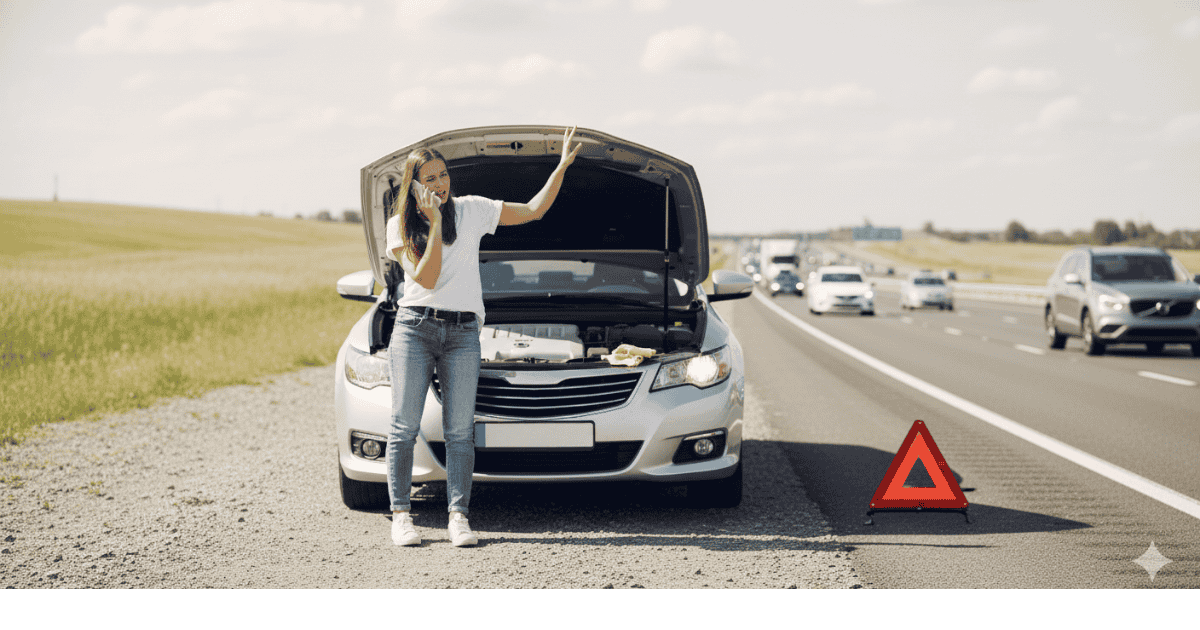
Your car just died on the highway. Now you're scared about what happens next. Here's exactly what to do right away.
This guide shows you every step to stay safe. You'll learn the exact order of actions. Plus how to avoid common mistakes.
The 10 Essential Steps When Your Car Breaks Down
Step 1: Hit Your Hazard Lights Immediately
Turn on hazards the second you feel trouble. Don't wait even 5 seconds. These lights tell drivers behind you something's wrong.
Your hazard button has a red triangle symbol. It's usually on your dashboard center. Press it right away when you notice problems.
Hazard lights help other drivers see your problem. They give you time to move safely. This first action prevents rear-end crashes.
Step 2: Get Off the Road Safely
Don't slam your brakes hard. Use your car's momentum to coast. Look for a wide shoulder or exit ramp.
Aim for the right shoulder on highways. Go as far right as possible. Leave room to exit safely later.
If no shoulder exists, find any safe spot. Parking lots work great. Even wide driveways help.
Step 3: Position Your Vehicle Right
Turn your wheels away from traffic. This protects you if someone hits your car. The impact won't push you into lanes.
Set your parking brake firmly. Keep your seatbelt on for now. Leave the engine off to prevent fires.
Park on level ground when possible. Hills make everything harder. Flat spots are always safer.
Step 4: Check Before You Exit
Look in all mirrors first. Watch for cars coming fast. Exit only when it's clear.
Exit on the passenger side away from traffic. Never use the driver's door on highways. This keeps you away from passing cars.
Take your phone and keys. Grab your emergency kit too. Lock doors after everyone exits.
Step 5: Move to a Safe Spot
Get far away from your vehicle. Stand behind the guardrail if possible. Move at least 20 feet from traffic.
Never stand behind or in front of your car. Crashes happen from both directions. Stay visible but protected.
On highways, climb up the embankment. Higher ground is safer. Distance saves lives in crashes.
Step 6: Set Up Warning Triangles
Place triangles at 10, 100, and 200 feet behind your car. This gives drivers time to move over. Use reflective triangles for best visibility.
Walk facing traffic when placing triangles. Wear bright clothes if possible. Watch for distracted drivers constantly.
On regular roads, place triangles 45 meters back. For highways, use 100 meters minimum. Curves need even more distance.
Step 7: Call for Emergency Help
Dial 911 first on highways. Tell them your exact location. Use mile markers or exit numbers.
Call roadside assistance next. AAA responds in about 28 minutes average. Have your membership number ready.
Give clear details about your problem. Mention if you're blocking traffic. Ask for estimated arrival time.
Step 8: Document Everything Now
Take photos of your car's position. Get pictures of any damage. Record the exact location too.
Note the time of breakdown. Write down weather conditions. Save tow truck company details.
This info helps with insurance claims. It proves what really happened. Photos prevent false damage claims.
Step 9: Stay Alert While Waiting
Keep doors locked while waiting. Watch for people approaching. Call police if you feel unsafe.
Don't accept rides from strangers. Wait for official help only. Professional towers have proper ID.
Keep your phone charged. Use it sparingly for updates. Save battery for emergencies.
Step 10: Prepare for the Tow
Remove all valuables first. Get insurance cards ready. Clear personal items from seats.
Know where you want towing. Choose your regular mechanic. Or pick the nearest safe shop.
Ask about towing costs upfront. Standard towing costs $75-$125 locally in 2025. Expect $2-$4 per mile after that.
Location-Specific Breakdown Rules
Highway and Interstate Breakdowns
Highways are the most dangerous spots. Cars pass at 70+ mph. One mistake can be deadly.
Pull onto the shoulder quickly but safely. Signal your intentions early. Stay on level ground when possible.
If no shoulder exists, keep hazards on. Stay inside with seatbelts fastened. Wait for emergency help.
City Street Breakdowns
City breakdowns have different risks. Traffic is slower but heavier. Parking rules still apply.
Move to parking spots fast. Avoid blocking intersections. Don't stop in bus lanes.
Turn wheels toward the curb. This prevents rolling. Set parking brake extra firm.
Rural Road Breakdowns
Rural areas lack cell service often. Help takes longer arriving. Prepare for long waits.
Find a wide turnout spot. Get completely off pavement. Soft shoulders can trap cars.
Leave a note if walking for help. Say where you're going. Include return time estimate.
Bridge and Tunnel Breakdowns
Bridges have zero escape room. Tunnels trap smoke and fumes. Both need quick action.
Get to emergency areas fast. Use emergency phones if available. Exit the tunnel if possible.
Never stop mid-bridge unless forced. Coast to either end. Emergency crews respond faster there.
Bad Weather Breakdowns
Rain, snow, and fog multiply dangers. Visibility drops to nothing. Roads become ice rinks.
Increase triangle distance in bad weather. Use LED flares for extra visibility. Wear reflective vests always.
Stay in your car during storms. Run heat briefly only. Crack windows to prevent carbon monoxide.
Red Flags: What NOT to Do
Never Try These Dangerous Moves
Don't push your car alone. Traffic won't see you. One slip means disaster.
Avoid standing between cars. Crashes crush people here. Stay clear of all gaps.
Never wave at traffic. Drivers might misunderstand signals. You could cause crashes.
Skip These Common Mistakes
Don't leave your car in drive. It can roll forward. Always use park gear.
Forget trying repairs on highways. It's never worth the risk. Wait for safe locations.
Don't drain your phone battery. Avoid non-emergency calls. Save power for real needs.
Avoid Predatory Towing Scams
Legitimate towers don't patrol for business. Real companies wait for calls. Be suspicious of quick arrivals.
Watch for unsolicited tow trucks. Demand to see proper licensing. Call your own trusted service.
Never sign blank forms. Read everything carefully first. Know costs before agreeing.
Emergency Kit Must-Haves
Essential Safety Items
Every car needs reflective triangles. Pack jumper cables, flashlights, and first aid. Add water and snacks too.
Include phone chargers always. Battery packs work great. USB cables for all phones.
Carry basic tools like screwdrivers. Add blankets for cold weather. Work gloves protect hands.
Seasonal Additions Matter
Winter needs ice scrapers. Add sand for traction. Hand warmers save fingers.
Summer requires extra water. Pack sunscreen and hats. Cooling towels help too.
Update kits every season. Check expiration dates regularly. Replace used items immediately.
Insurance and Roadside Coverage
Understanding Your Coverage Options
Roadside assistance costs $14-$40 yearly through insurance. Geico offers coverage for just $14. Progressive charges $16 annually.
AAA Plus membership costs $100 yearly. You get 100 miles of towing included. That's excellent value for frequent drivers.
Credit cards offer coverage too. Chase Sapphire Reserve includes $50 per incident. You get four uses yearly free.
Making Smart Coverage Choices
Compare insurance add-ons first. They're usually cheapest overall. Check coverage limits carefully.
Some plans cover only your car. Others cover you in any vehicle. Personal coverage offers more flexibility.
Consider your driving habits. Long commutes need better coverage. Older cars need more help. Compare all towing coverage options.
Special Situations Need Special Care
Electric Vehicle Breakdowns
EVs require flatbed towing only. Regular towing damages the motor. Wheels must stay off the ground.
Many EVs lack spare tires. Flat tires mean automatic towing. Plan for this limitation.
Tell towers it's an EV immediately. Not all companies handle EVs. Special equipment is required.
Commercial Vehicle Requirements
Trucks must place triangles within 10 minutes. Federal law requires three triangles minimum. Fines apply for non-compliance.
Place triangles at specific distances always. Use 10, 100, and 200 feet spacing. Curves need 500 feet warning.
Commercial drivers face stricter rules. Know federal requirements completely. State rules may differ.
Teen and New Driver Situations
New drivers panic more easily. Practice breakdown procedures regularly. Build confidence through preparation.
Program emergency numbers in phones. Include parents and insurance. Add trusted mechanics too.
Teach safe exit procedures. Practice hazard light location. Review triangle placement rules.
Costs to Expect in 2025
Towing Service Pricing
Basic towing runs $75-$125 for 5-10 miles. After-hours service adds 25-50% more. Weekends cost 30-60% extra.
Flatbed towing costs $95-$135 typically. Longer distances add $2-$5 per mile. Heavy vehicles cost more.
Get quotes before agreeing. Ask about all fees upfront. Confirm payment methods accepted.
Additional Service Costs
Jump starts cost $50-$75 alone. Tire changes run $50-$75 too. Locksmith services cost $50-$150.
Fuel delivery costs $50-$75 minimum. You pay for gas separately. Service fees apply always.
Compare these to annual coverage. Membership plans cost $80-$200 yearly. One service call covers the cost. Get detailed pricing information before you need it.
After the Breakdown
Following Up Properly
Check your car thoroughly later. Look for towing damage. Document any new problems.
File insurance claims quickly. Include all photos taken. Submit towing receipts promptly.
Schedule full vehicle inspection. Find the breakdown cause. Prevent future problems now.
Learning from Experience
Update your emergency kit. Add missing items immediately. Replace what you used.
Review what went right. Note what went wrong. Adjust your plan accordingly.
Share lessons with family. Teach them proper procedures. Practice makes perfect.
Prices from major providers like AAA, Geico, Progressive, and State Farm are current as of 2025. We're not affiliated with these companies.
Frequently Asked Questions
Find Trusted Towing Services Near You
Search our directory of verified towing professionals in your area.
Find Towing Services Near You

Discussion (0)
Be the first to comment!
Share your experience or ask questions about towing services.