

The towing industry is experiencing its biggest transformation in decades. Modern towing technology is making roadside assistance faster, smarter, and more reliable than ever before.
In 2026, the average tow truck response time has dropped to just 28 minutes thanks to GPS optimization and automated dispatch systems. That's down from 45 minutes just five years ago.
This tech revolution isn't just changing how towing companies operate. It's completely reshaping the customer experience and driving down costs across the board.
How GPS Technology is Revolutionizing Towing Response Times
Real-time GPS tracking has become the backbone of modern towing operations. Every major towing company now uses advanced location systems to find the closest available truck.
Here's what GPS technology delivers in 2026:
- Pinpoint location accuracy within 3 feet
- Real-time traffic routing to avoid delays
- Dynamic truck assignment based on proximity
- Live ETA updates sent directly to customers
- Weather-based route optimization for safer travel
- Geofencing alerts when trucks enter service areas
- Historical traffic pattern analysis for better positioning
Companies like AAA report that GPS optimization has cut their average response times by 35%. The system automatically calculates the fastest route and assigns the nearest available truck.
But GPS does more than just speed up arrivals. It also prevents the common problem of drivers giving wrong locations. The system can detect when a customer's stated location doesn't match their phone's GPS coordinates.
Advanced GPS systems now include predictive analytics that help companies position trucks in high-demand areas before peak hours. During rush hour traffic, trucks are strategically placed near major highways and accident-prone intersections. This proactive positioning has reduced response times by an additional 12% during peak periods.
Cost Impact: Faster response times mean lower labor costs, which get passed on to customers. The average towing bill has actually decreased 8% since 2024 despite inflation.
What Mobile Apps Are Doing for Towing Services
Towing apps have exploded in popularity. Over 60% of tow requests now come through mobile platforms rather than phone calls.
The best towing apps in 2026 offer these features:
- One-tap emergency booking
- Upfront pricing with no surprises
- Photo documentation of vehicle damage
- Digital payment processing
- Driver ratings and reviews
- Real-time truck tracking
- Multi-language support for diverse customers
- Voice-activated emergency requests
- Integration with roadside assistance memberships
- Offline functionality for areas with poor cell coverage
Popular apps like Urgently and HONK have partnered with insurance companies to streamline claims. When you request a tow, the app automatically notifies your insurer and starts the claim process.
The app experience mirrors what people expect from Uber or DoorDash. You see your driver's photo, truck details, and exact arrival time. No more sitting on the roadside wondering when help will arrive.
Modern towing apps also include safety features like emergency contact notifications and location sharing with family members. Some apps can detect when you've been in an accident based on sudden deceleration and automatically request towing services.
Pro Tip: Download a reputable towing app before you need it. Having it ready saves precious minutes during an emergency.
How Automated Dispatch Systems Are Changing Everything
Artificial intelligence now handles most towing dispatch decisions. These systems process hundreds of variables in seconds to make optimal assignments.
AI dispatch considers:
- Truck location and availability
- Driver skill sets and certifications
- Vehicle type and required equipment
- Current traffic conditions
- Weather and road conditions
- Customer priority level
- Historical performance data for each driver
- Fuel efficiency calculations for route optimization
- Equipment compatibility with specific vehicle makes
The results speak for themselves. Companies using AI dispatch report 42% faster response times and 25% higher customer satisfaction scores.
These systems also prevent human errors. They won't send a flatbed truck to a motorcycle accident or dispatch an inexperienced driver to a complex recovery job.
Some systems even predict demand patterns. They position trucks in high-probability areas before incidents occur, kind of like how ride-share services work.
Machine learning algorithms continuously improve dispatch decisions by analyzing millions of service calls. The system learns from successful assignments and adjusts future recommendations based on outcomes. This self-improving capability has reduced dispatch errors by 67% compared to manual systems.
Why Smart Vehicle Diagnostics Matter for Towing
Modern vehicles are essentially computers on wheels. They generate massive amounts of diagnostic data that towing companies can now access remotely.
Connected car technology lets towing services know:
- Exact breakdown location
- Specific mechanical problems
- Whether the vehicle is safe to tow
- Required equipment and parts
- Battery status and electrical system health
- Transmission and drivetrain condition
- Tire pressure and wheel alignment issues
This data helps dispatchers send the right truck with the right equipment on the first try. No more sending a wheel-lift truck when you need a flatbed.
Some luxury vehicles like BMW and Mercedes automatically contact roadside assistance when they detect major malfunctions. The car sends diagnostic codes directly to the service center.
Electric and hybrid vehicles present unique towing challenges that smart diagnostics help solve. The system can determine if the high-voltage battery is damaged or if special EV-certified equipment is needed for safe transport.
Real Example: When a Tesla's battery management system fails, it transmits specific error codes. The towing company knows immediately that they need a flatbed truck and EV-trained technicians.
What Dynamic Pricing Technology Means for Customers
Gone are the days of surprise towing bills. Advanced pricing algorithms now provide upfront cost estimates based on multiple factors.
Dynamic pricing considers:
- Distance to tow destination
- Vehicle type and weight
- Time of day and demand levels
- Special equipment requirements
- Road difficulty and access issues
- Fuel costs and current market rates
- Insurance coverage and payment methods
- Seasonal demand fluctuations
This transparency has reduced billing disputes by 60%. Customers know exactly what they'll pay before the truck arrives.
| Service TypeBase Price 2026Peak Hours Surcharge | ||
| Local Tow (5 miles) | $85-120 | +15% |
| Highway Recovery | $150-250 | +25% |
| Motorcycle Tow | $75-100 | +10% |
| Heavy Duty Tow | $200-400 | +30% |
Some companies offer subscription pricing models. For $15 per month, you get unlimited local towing and discounted long-distance service.
The pricing transparency has actually increased competition. Customers can easily compare rates and choose the best value for their situation.
How Digital Documentation Is Protecting Everyone
Paper forms and handwritten receipts are disappearing from the towing industry. Digital documentation protects both customers and service providers.
Modern towing technology captures:
- Time-stamped photos of vehicle condition
- GPS coordinates of pickup and drop-off
- Digital signatures on electronic devices
- Video recordings of the towing process
- Automated damage inspection reports
- Weather conditions and road surface documentation
- Chain-of-custody tracking for impounded vehicles
- Customer interaction recordings for quality assurance
This documentation prevents false damage claims and protects customers from overcharging. Everything is stored in the cloud with timestamps and location data.
Insurance companies love this transparency. Claims processing is faster when there's clear digital evidence of vehicle condition and service details.
Customer Benefit: You get instant digital receipts and photos sent to your email. No more lost paperwork or disputed charges.
What Fleet Management Technology Delivers
Towing companies are using sophisticated fleet management systems to optimize their operations. These platforms track every aspect of truck performance and driver behavior.
Fleet technology monitors:
- Vehicle maintenance schedules
- Fuel efficiency and route optimization
- Driver safety scores and compliance
- Equipment usage and wear patterns
- Customer service metrics
- Environmental impact and emissions tracking
- Regulatory compliance and inspection records
- Parts inventory and supply chain management
Well-maintained trucks break down less often. That means fewer service interruptions and more reliable response times for customers.
The systems also track driver performance. Operators with high safety scores and customer ratings get priority assignments and better routes.
Predictive maintenance alerts prevent truck breakdowns before they happen. Sensors monitor engine performance, brake wear, and hydraulic system pressure.
This technology has reduced towing company operating costs by 18% since 2024. Those savings translate into more competitive pricing for consumers.
How Customer Communication Has Gone High-Tech
The days of wondering where your tow truck is are over. Modern communication systems keep customers informed every step of the way.
Today's towing services provide:
- Automated SMS updates with ETA changes
- Live chat support through mobile apps
- Photo updates of truck location and progress
- Digital receipts and service documentation
- Follow-up surveys and feedback collection
- Multi-channel support including social media
- Video calls for complex situation assessment
- Automated translation services for language barriers
Customers can track their tow truck like they track a pizza delivery. The app shows the driver's location, estimated arrival time, and any delays.
Two-way messaging lets customers communicate directly with their driver. You can share additional details about your vehicle or update your drop-off location.
Some companies send photos when the truck arrives at your location. This helps in crowded parking lots or when visibility is poor.
Communication Stat: Companies with real-time communication report 40% higher customer satisfaction scores compared to traditional phone-only services.
What Integration with Insurance Companies Means
Towing technology now connects directly with insurance systems. This integration streamlines claims and reduces paperwork for everyone involved.
When you request a tow through your insurance app, the system:
- Verifies your coverage automatically
- Pre-approves the service based on your policy
- Sends claim details directly to your insurer
- Processes payment without customer involvement
- Updates your claim status in real-time
- Coordinates with repair shops for vehicle delivery
- Tracks service quality metrics for network providers
Major insurers like GEICO, Progressive, and State Farm have partnered with towing networks to offer seamless service. You don't pay upfront or file separate claims.
The integration also prevents fraud. Insurance companies can verify service details, locations, and pricing in real-time through connected systems.
Some policies now include usage-based pricing. If you rarely need towing, you pay less. Frequent users might pay higher premiums but get priority service.
Understanding your towing insurance coverage is more important than ever with these new integrated systems.
How Safety Technology Is Reducing Roadside Risks
Roadside safety has improved dramatically thanks to new technology. Smart safety systems protect both customers and towing operators during service calls.
Advanced safety features include:
- Automated warning light systems that activate on approach
- Traffic monitoring cameras that alert drivers to hazards
- Emergency beacon technology for high-visibility marking
- Collision avoidance systems on tow trucks
- Weather monitoring for dangerous condition alerts
- Smart reflective clothing with LED integration
- Vehicle proximity sensors for operator protection
- Emergency communication systems with first responders
LED warning systems now automatically adjust brightness based on ambient light and weather conditions. They're visible from over a mile away in clear conditions.
Some tow trucks use radar technology to detect approaching vehicles. If a car is traveling too fast or drifting toward the work zone, the system triggers additional warnings.
Wearable safety devices alert tow operators to incoming traffic through vibration and audio warnings. These devices have reduced operator injuries by 30% since 2024.
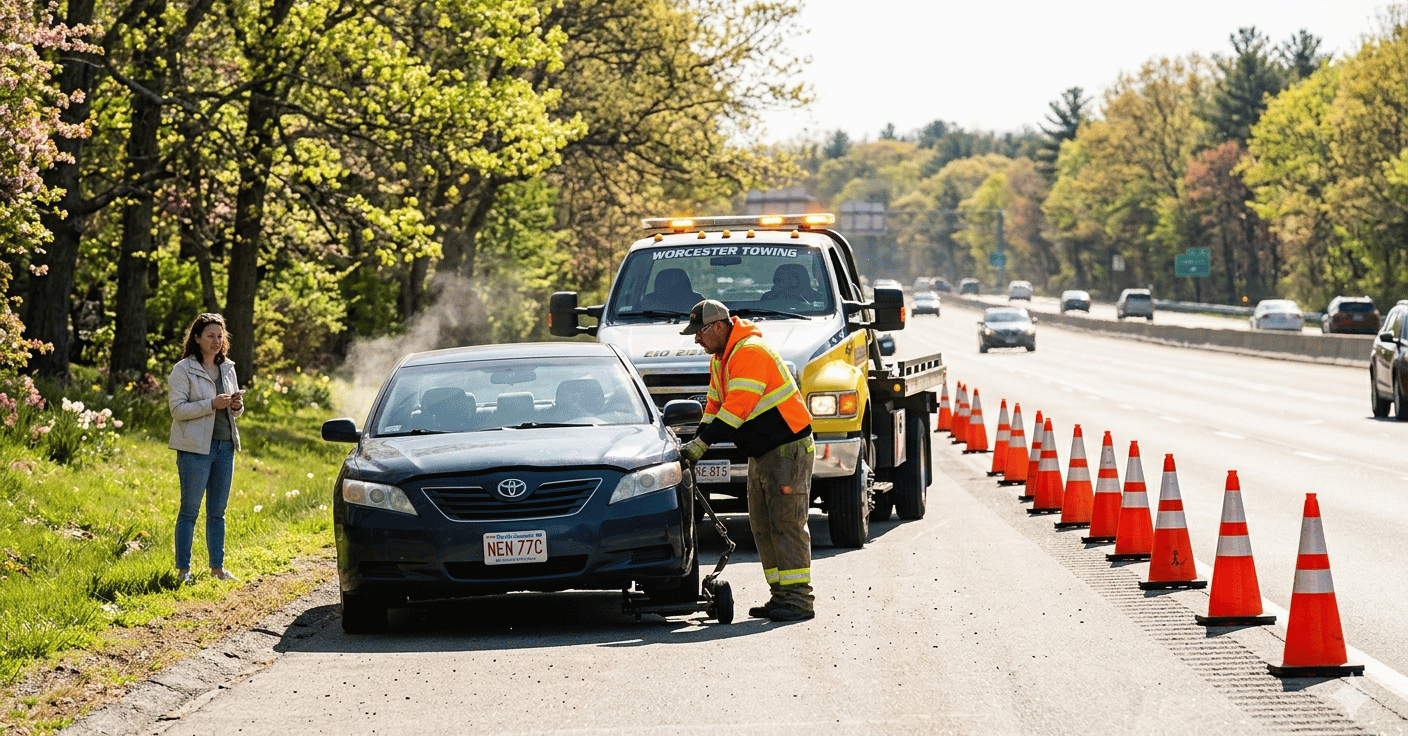
Safety Reminder: Even with advanced technology, always stay in your vehicle or move to a safe location when waiting for a tow truck on busy roads.
Common Mistakes to Avoid When Using Towing Technology
While modern towing technology offers many benefits, customers can still make mistakes that complicate their service experience.
Avoid these common technology-related errors:
- Not updating your location if you move after requesting service
- Providing inaccurate vehicle information in the app
- Ignoring app notifications about driver arrival or delays
- Not taking photos of your vehicle's condition before towing
- Failing to verify the tow truck operator's identity through the app
- Not saving digital receipts and documentation immediately
- Assuming all towing apps offer the same level of service
Many customers don't realize that moving even a few blocks can significantly impact their tow truck's arrival time. Always update your location in the app if you relocate after requesting service.
Vehicle information accuracy is crucial for proper equipment dispatch. Providing the wrong make, model, or vehicle type can result in delays when the wrong truck arrives.
Some customers ignore app notifications, missing important updates about delays or driver arrival. Enable push notifications and check them regularly during your service window.
Technology Tip: Screenshot your service request confirmation and driver details. This information can be valuable if you need to contact customer service or file a complaint.
What the Future Holds for Towing Technology
The towing industry continues to evolve rapidly. Several emerging technologies will reshape the industry even further by 2027.
Coming innovations include:
- Autonomous tow trucks for simple recovery jobs
- Drone-assisted vehicle location and assessment
- Augmented reality for complex recovery planning
- Blockchain-based service verification
- Electric tow trucks with extended range capabilities
- AI-powered damage assessment through smartphone cameras
- Voice-activated emergency services integration
- Predictive breakdown alerts from connected vehicles
Autonomous technology is being tested for basic highway recoveries. These trucks can handle simple breakdowns without human operators, reducing costs and response times.
Drones are already being used to locate vehicles in difficult terrain. They can assess damage and determine required equipment before trucks are dispatched.
Electric tow trucks are becoming viable as battery technology improves. Several companies are testing all-electric fleets in urban areas where air quality is a concern.
The technology adoption rate in towing has accelerated 300% since 2022. What once took years to implement now happens in months.
How to Choose Tech-Savvy Towing Services
Not all towing companies have embraced modern technology equally. Here's how to identify providers that offer the best tech-enabled service.
Look for these technology features:
- Mobile app with real-time tracking
- Upfront pricing with no hidden fees
- Digital payment processing
- Photo documentation of service
- 24/7 customer support through multiple channels
- Integration with major insurance providers
- Fleet tracking and driver verification systems
- Automated service quality monitoring
- Multi-language customer support options
Check online reviews specifically for mentions of technology and communication. Customers usually comment on tracking accuracy and response time estimates.
Ask potential providers about their dispatch system. Companies using AI-powered dispatch can usually give you more accurate ETAs and better service matching.
Verify that they offer digital receipts and documentation. This protects you from billing disputes and provides records for insurance claims.
Research the company's technology investment history. Providers who regularly update their systems and training programs typically offer more reliable service.
Find towing services near you that use modern technology for faster, more reliable roadside assistance.
Red Flag: Avoid companies that only accept cash payments or can't provide digital receipts. These are signs of outdated business practices.
The towing technology revolution is just getting started. As these systems become more sophisticated, customers can expect even faster response times, lower costs, and better service quality. The key is choosing providers who've invested in modern technology and training their staff to use it effectively.
Smart consumers research their options before emergencies happen. Choosing a reliable tow truck company with modern technology can make the difference between a minor inconvenience and a major headache when you're stranded on the roadside.
Frequently Asked Questions
Need Emergency Towing Services?
Don't wait when you're stranded. Get professional help now.
Find Tech-Enabled Towing Services

Discussion (0)
Be the first to comment!
Share your experience or ask questions about towing services.